Some homes are easy to compare.
2535 Hinkles Ferry wasn’t one of them.
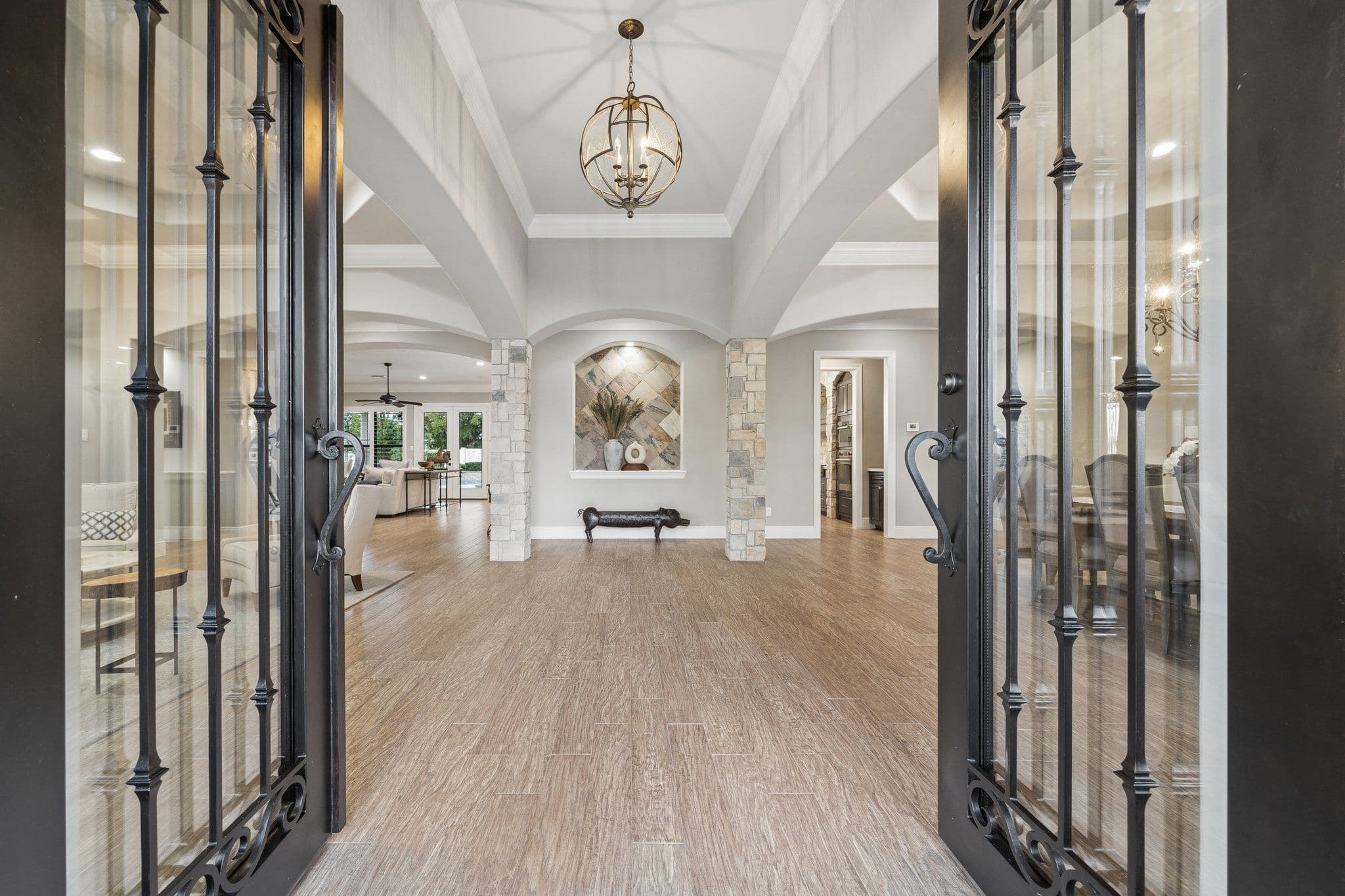
This custom estate in Texana Plantation had a lot going for it: approximately 6,322 square feet on about 1.5 acres, mostly single-story living, five ensuite bedrooms, expansive entertaining spaces, a theater, pool and extensive garage capacity.
But when it came time to sell, we also had some very real challenges.
We were bringing one of the highest-priced homes in the neighborhood to market.
It backed to a roadway, while some competing properties in Texana Plantation offered lakefront or no-back-neighbor settings.
And after more than a decade of ownership, the sellers had made several highly personal custom design choices throughout the home.
In other words:
This was never going to be a “put it in MLS and wait” kind of listing.
Seven days after hitting the market, the home was under contract.
So how did we get there?
We studied what buyers in this price range were actually responding to, made a small number of strategic pre-listing changes, staged the home around lifestyle and scale, positioned its strengths against its challenges, and concentrated attention into a high-impact launch.
Here is the strategy behind the sale.
A Custom Home Built Around One Family
The sellers had not designed this home with resale in mind.
They designed it around the way their family lived.
They added a half-story so their teenage son could have a space of his own.
The theater held years of movie nights and game nights.
The large gathering areas had hosted family, friends and celebrations.
The finishes and fixtures were selected because the owners genuinely loved them.
Now they were building their next home.
And while getting the best possible result mattered, they also hoped the next family would walk through the doors and love this house the way they had.
That became an important part of the story.
But first, we had to make sure the next buyer could easily picture themselves here.
How Do You Sell a Highly Customized Luxury Home?
Customization is part of what makes a home special.
But resale changes the audience.
The question is no longer only:
“What do the current owners love?”
It becomes:
“What is the qualified buyer shopping in this price range responding to right now?”
Before recommending that the sellers spend money changing anything, I studied competing luxury homes in Richmond and Fort Bend County.
I looked at:
- what was selling quickly
- what was sitting
- how competing homes were being presented online
- which finishes and visual styles appeared in the homes getting the strongest response
- how buyers were reacting at this price point
In the homes I studied, the properties receiving some of the strongest attention tended to have lighter, cleaner and more visually current interiors.
That research shaped our preparation plan.
Should You Update a Custom Home Before Selling?
Not automatically.
One of the easiest mistakes a seller can make is assuming that preparing a home for sale means renovating everything.
It doesn’t.
The better question is:
Where will spending money meaningfully change a buyer’s perception—and where won’t it?
The sellers had chosen rich wood-tone shutters and coordinating crown molding in several of the main living spaces. They had also selected distinctive statement fixtures that reflected their personal style.
Those weren’t bad choices.
They were custom choices.
My job was to evaluate them through the eyes of the next buyer.
Instead of recommending a major renovation, I suggested a small number of strategic changes designed to broaden the home’s appeal.
We lightened selected architectural elements so the main spaces felt brighter and more cohesive.
We changed several fixtures to create a cleaner visual line.
We rearranged furnishings and brought in selected pieces where they helped buyers understand the size and function of the rooms.
The goal wasn’t to strip away the home’s character.
It was to remove anything that might distract buyers long enough for them to see what was truly extraordinary about the property.
That distinction matters.
Does Staging Matter When Selling a Luxury Home?
For a home like this, absolutely.
But luxury staging is about more than putting attractive furniture into a room.
I think of it as merchandising the home.
A 6,000-plus-square-foot property can actually be difficult to understand from photographs if the furniture placement doesn’t communicate scale and function.
We wanted buyers to immediately understand:
Where would our family gather?
Could we host Thanksgiving here?
Where would the teenagers hang out?
Where would friends gather during a party?
Does a home this large still feel warm?
Those are emotional questions, not simply architectural ones.
We weren’t just staging square footage. We were helping buyers imagine their life there.
Take a Look Inside 2535 Hinkles Ferry
This full property tour shows the finished presentation after the strategic updates, staging and preparation were complete.
The finished home was beautiful.
But presentation alone wasn’t enough.
How Do You Position a Luxury Home When Buyers Have Other Options?
At this price point, buyers could compare 2535 Hinkles Ferry not only with other Texana Plantation homes, but with luxury properties in surrounding communities.
And we had some factors we needed to overcome.
The home had a documented prior flood history from Hurricane Harvey.
It backed to a roadway rather than one of the lakefront or no-back-neighbor settings available elsewhere in the neighborhood.
And we were positioned at the very top of the neighborhood’s price range.
We could not change those things.
So rather than pretending they didn’t exist, the strategy was to make the home’s hard-to-duplicate strengths impossible to miss.
The acreage.
The 6,322 square feet.
The mostly single-story layout.
Five ensuite bedrooms.
The theater.
The garage capacity.
The oversized kitchen and entertaining spaces.
The pool.
And perhaps most importantly, the way the entire home had been built around gathering.
The goal was not to make this home look like every other luxury property.
It was to make the right buyer understand why this particular home deserved consideration despite the alternatives.
We Didn’t Just List It. We Launched It.
Once the house was ready, I didn’t want the first weekend to consist of simply putting it in MLS and waiting.
The earliest days on market are an important opportunity to concentrate attention while a listing is still new.
Buyers receive alerts.
Agents send properties to clients.
Neighbors start talking.
People send listings to friends and family.
So we created a launch around the way this home was actually meant to be experienced.
We called it Sips & Strings.
Live harp music.
Champagne.
Desserts.
And a home built for gathering filled with people actually gathering.
I personally reached out to the surrounding community and mailed letters to neighbors.
We promoted the property through multiple marketing channels and invited buyers, residents and people in our networks to experience the home.
More than 70 people walked through the doors during the launch.
And that wasn’t valuable simply because 70 is a big number.
Something happened inside the home that photos alone couldn’t reproduce.
People heard music.
They gathered around the kitchen.
They wandered through the theater.
They stood outside by the pool.
They watched other people enjoying the spaces.
Instead of wondering what entertaining here might feel like, buyers could actually experience it.
Why Were the Neighbors Part of the Marketing Strategy?
More than a dozen neighborhood households were represented during the Saturday event.
That was intentional.
Neighbors may not be buying the house next door, but they know the community better than almost anyone.
They know the friend who has talked about moving nearby.
The adult child who wants to be closer.
The coworker looking for acreage.
The family member who has always loved the neighborhood.
And when neighbors are excited about a property, they talk about it.
The following day, we held another strategically timed open house.
Saturday created energy and excitement.
Sunday provided a quieter opportunity for more serious buyers to come back and experience the home differently.
The idea was to concentrate meaningful activity around the property while it was freshest to the market.
There is a difference between simply putting a home on the market and intentionally creating a market for the home.
How Did 2535 Hinkles Ferry Go Under Contract in 7 Days?
There wasn’t one magic tactic.
That may be the most important lesson from this sale.
It was the combination.
We studied current buyer behavior before recommending improvements.
We made selective changes rather than unnecessary renovations.
We staged the property to communicate scale, warmth and lifestyle.
We identified the challenges before going to market instead of being surprised by them later.
We positioned the home’s hard-to-replicate strengths against the competition.
We invested in professional photography, video and a 3D tour.
We marketed before the launch.
We involved the surrounding community.
And we concentrated attention during the first weekend.
Within days, we had strong buyer interest and an offer compelling enough that the sellers chose to accept it and cancel our remaining open houses and private showing requests.
Seven days after 2535 Hinkles Ferry hit the market, it was under contract.
It closed at approximately 99.2% of list price.
What Actually Sold the Home?
Was it the updates?
Staging?
Pricing?
Photography?
Video?
The neighborhood letters?
Sips & Strings?
The back-to-back open houses?
No single one of those things deserves all the credit.
The result came from the combination: research, preparation, positioning, presentation, pricing and creating the right amount of attention at the right time.
There was one more important part of the strategy.
The sellers trusted the process.
It isn’t always easy to hear recommendations about a home you’ve spent years creating.
They asked questions.
We talked through the reasoning.
They invested selectively where the market suggested it mattered.
And they allowed me to prepare the home for the next buyer while still respecting everything that had made it theirs.
That partnership mattered.
What Can Other Luxury Home Sellers Learn From This Sale?
The biggest lesson from 2535 Hinkles Ferry isn’t:
“Everyone should repaint.”
It isn’t:
“Everyone should stage.”
And it definitely isn’t:
“Throw an event and your home will sell in seven days.”
The lesson is much bigger:
The more unique the property, the more individualized the selling strategy needs to be.
One of the easiest assumptions for a homeowner to make is:
“We spent a lot of money on these improvements, so buyers will see the value.”
Sometimes they will.
But the next buyer may not assign value to exactly the same things the current owner did.
That doesn’t make those improvements wrong.
It simply means there is a difference between personal value and market appeal.
Before listing a custom or luxury home, I want to understand:
- What are buyers in this price range choosing right now?
- Which features are genuinely driving value?
- Which custom elements help the property?
- Which ones may narrow the buyer pool?
- What objections are buyers likely to have?
- What can we improve without over-renovating?
- What should the seller absolutely NOT spend money changing?
- How should unusually large or specialized rooms be staged?
- What makes this particular property difficult to duplicate?
- How should we position it against its competition?
- How do we use the first days on market intentionally?
Sometimes the right recommendation is an improvement.
Sometimes it’s staging.
Sometimes it’s pricing.
And sometimes I tell a seller:
Don’t spend a dime on that.
The answer should come from the home, the competition and the buyer—not from a generic checklist.
Should I Update My Luxury Home Before Selling?
If selling is somewhere on your radar—even if it’s a year or two away—I would much rather have this conversation before you start spending money.
A pre-listing walk-through can help answer:
What would I change? What would I leave alone? And where wouldn’t I spend a dime?
Sometimes a handful of strategic changes can make a meaningful difference.
Sometimes the smartest recommendation is to do absolutely nothing.
2535 Hinkles Ferry didn’t need to become a different house.
It needed to be strategically repositioned for the next buyer.
The goal was to understand what made it extraordinary, recognize the challenges we had to overcome, broaden its appeal where it made sense, and then make sure the right buyer understood its value.
Seven days after we introduced it to the market, someone did.
And another family now gets to begin their story there.
Frequently Asked Questions About Selling a Custom Luxury Home
Is it harder to sell one of the most expensive homes in a neighborhood?
It can be. Buyers shopping at the top of a neighborhood’s price range usually have more alternatives, including properties in other communities. That makes pricing, presentation, differentiation and marketing especially important. The goal is to communicate why the property deserves its position in the market rather than relying on price per square foot alone.
Should I renovate my custom home before listing it?
Not automatically. The right improvements depend on the home’s current condition, competing properties and what today’s buyers are responding to. In some cases, targeted changes to paint, lighting, staging or furniture placement can improve presentation without requiring a major renovation.
Does staging matter for a luxury home?
Yes, particularly when a home contains large, unusual or highly customized spaces. Effective staging helps buyers understand scale, function and lifestyle. The objective is not simply to decorate. It is to make it easier for buyers to imagine themselves living there.
How do you price a custom luxury home when there aren’t good comparable sales?
Custom properties often require more analysis than simply applying a neighborhood price per square foot. Lot size, location within the neighborhood, construction quality, floor plan, improvements, amenities, recent sales, competing inventory and current buyer behavior all need to be considered together.
Can a home with prior flood history still attract luxury buyers?
Yes, but the details matter. Sellers should be transparent about known history and required disclosures while also making sure buyers understand the property’s current condition, features and overall value proposition. Every property and situation is different.
Thinking About Selling a Custom or Luxury Home in Richmond or Fort Bend County?
If you’re considering selling in the next few months—or even the next year or two—you don’t need to have everything figured out before we talk.
I’d be happy to walk through your home with you and help you determine:
what I would change, what I would leave alone, and where I wouldn’t spend a dime.
That conversation can happen long before you’re ready to put a sign in the yard.
More about the community: Texana Plantation
Roberta Meggs is a Realtor with Keller Williams Southwest serving Richmond, Sugar Land, Fort Bend County and the greater Houston area. She is a Certified Negotiation Expert (CNE) and Pricing Strategy Advisor (PSA) who helps homeowners prepare, position, market and negotiate the sale of distinctive and luxury properties using a data-driven, highly personalized strategy.
Roberta Meggs · Keller Williams Southwest · Bigger Wins. Smaller Stress.
*Seller names changed to respect their privacy.