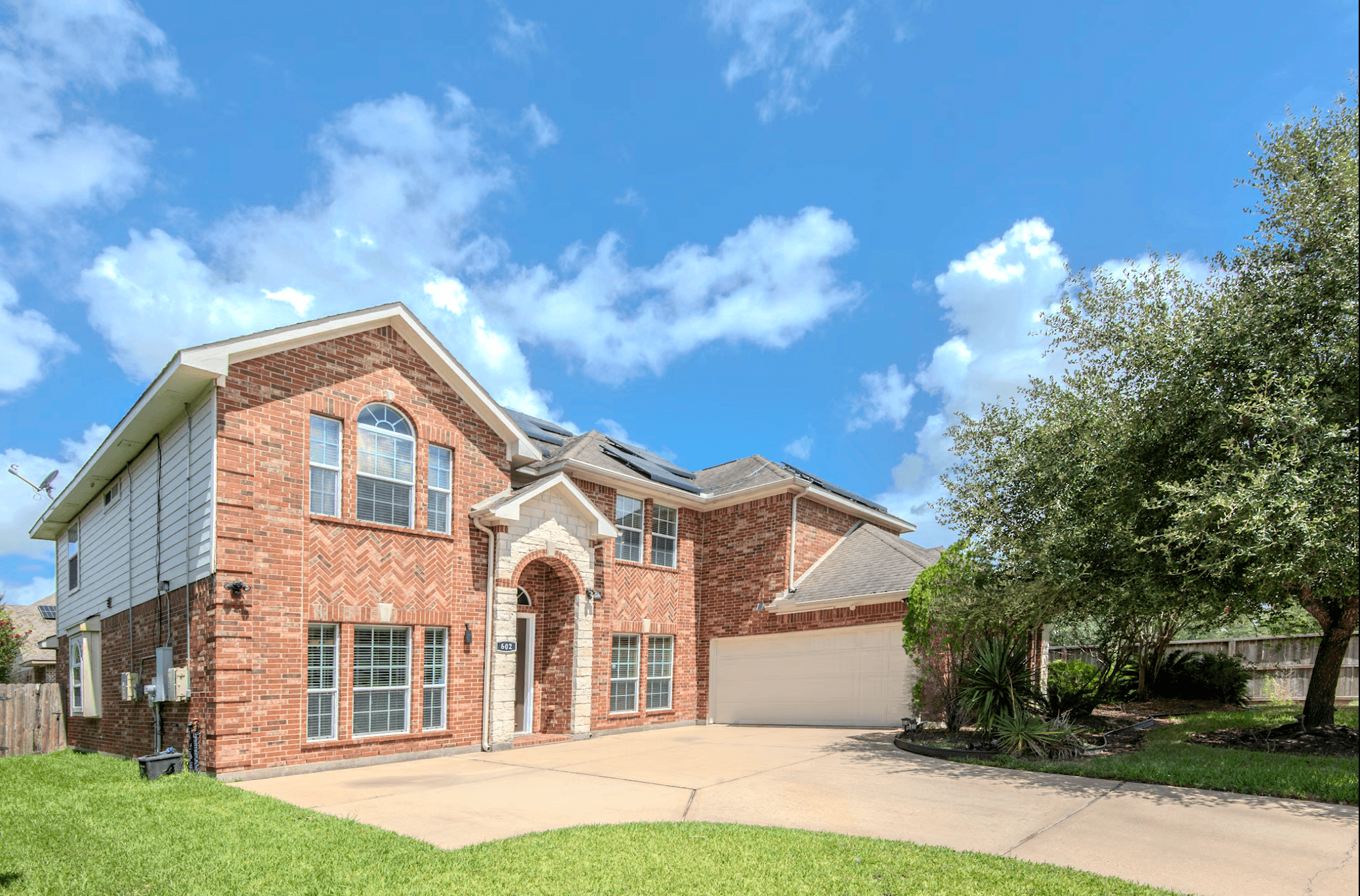
Your dream home. You think you'll get there someday, once you've saved up for a down payment. You'll finally stop paying someone else's mortgage and start building your own equity. But what if your dream home could be yours now, with zero down payment? You may have thought you need 20 percent down to buy a home. That's not true.
Let's say you found your dream home at $400,000. Twenty percent on a $400,000 house is $80,000, and your savings account may not get there this year.
Then someone mentions a loan that asks for nothing down. It sounds too generous to be true, and most people assume it only applies to farms. It is real, and it doesn't. The USDA Single Family Housing Guaranteed Loan is an ordinary 30-year mortgage from an ordinary lender, and for the right house on the right street it removes the one obstacle most buyers cannot get past.
Watch: how zero down actually works, and a Rosenberg home that qualifies
What a USDA loan actually is
The USDA does not write you a check. Your lender makes the loan the same way they would any other. What the USDA adds is a guarantee, a promise to cover part of the lender's loss if the loan goes bad. That promise is the reason a lender can say yes to zero down without charging you for the risk. It works much the way a VA loan does for veterans, except the qualifier is where the house sits and what your household earns.
A few things surprise people. It is not limited to first-time buyers. The USDA sets no maximum purchase price. And you do not need to farm anything.
Who qualifies for a USDA loan?
You qualify if the home sits in a USDA-eligible area, your household income falls under the local limit, you will live in the home as your primary residence, and a lender approves you for the payment.
Eligibility starts with the property, not with you. The USDA publishes a map of eligible areas, and the answer is decided address by address rather than neighborhood by neighborhood. Two homes a few minutes apart can land on opposite sides of a line, so look up the specific address rather than assuming an area qualifies or doesn't.
Income is where most people get tripped up. The limit is set at 115 percent of the area median and rises with household size, but the USDA counts every adult living in the home, not only the people signing the loan. A grown child with a job or a parent with a pension counts toward the limit even though neither is on the mortgage. If you are shopping for a multigenerational home, run that test with everyone who will live there before you tour anything. Deductions for dependents, childcare, and elderly households can lower the income the USDA measures, so a household slightly over the line is still worth running past a lender.
The home has to be your primary residence, and you need to move in within 60 days of closing. This is not a loan for a rental or a weekend place.
On credit, USDA itself sets no minimum score, so the answer depends on which lender you ask. USDA's own guidance treats 640 as the point where an applicant's credit reputation is considered met, and files below that get a closer manual review with more documentation behind it. Dale Branch, the lender I send USDA buyers to, takes files down to 580.

Where do USDA loans work around Fort Bend County?
Eligible areas are set by the USDA's property map, and in a growing county the boundaries rarely match what you would guess by looking out the window. The map follows census population data, so a subdivision that feels suburban can qualify while a quieter road nearby does not.
You can check any address yourself on USDA's property eligibility map. It returns one of three answers: eligible, ineligible, or unable to determine. That third answer is not a no. It means the boundary is not clearly drawn at that spot, and your lender has to confirm it with USDA staff before ordering an appraisal.
Here is a real one. 602 River Delta Lane, a home I listed in Rosenberg, comes back inside an eligible area. The ineligible band that covers Rosenberg proper, Brazos Town Center, and the Greatwood side of Highway 59 stops a short distance north of it. Same drive to the same grocery store, opposite sides of the line.

If you are drawn to land, this program is friendlier than most. The USDA sets no acreage limit. The lot needs to be typical for the area, and the land cannot be used mainly to produce income, but a personal garden or a hobby farm is fine.
What does a USDA loan cost?
A USDA loan carries a 1 percent upfront guarantee fee, which can be financed into the loan instead of paid at closing, and a 0.35 percent annual fee collected monthly for the life of the loan.
Those fees are how the program funds itself, which is also why the USDA can adjust them from year to year.
Set that against the alternative. Twenty percent down on a $400,000 house is $80,000 in cash. The upfront fee on a loan that size is about $4,000, and you can roll it into the loan rather than bring it to the table. For most families the difference is not a preference, it is the difference between buying this year and waiting three more.

The waiting has a price too, and it is easier to see than the down payment. At $2,500 a month, ten years of rent is $300,000. Thirty years is $900,000. That figure assumes your rent never goes up, which it will, so treat it as the low end.
You will still have closing costs. Some can be covered by loan funds when the appraisal supports it, and the seller is allowed to contribute up to 6 percent of the sales price toward them. Your interest rate is fixed and negotiated between you and your lender.
When is a USDA loan the wrong choice?
A USDA loan is the wrong choice if your household income is over the limit, the home you want sits outside an eligible area, you plan to rent the home out, or you already qualify for a conventional loan with 20 percent down.
That last one catches people off guard. The program is built for buyers who cannot get conventional credit. If you have 20 percent in non-retirement savings, can cover your closing costs, and qualify for a conventional 30-year loan without mortgage insurance, you are not who this loan is for, and both you and your lender have to certify it.
There are two more trade-offs worth knowing. The annual fee stays for the life of the loan, so it does not fall away as you build equity the way private mortgage insurance can. And the only term available is a 30-year fixed. No adjustable rates, no 15-year option.
None of that makes it a bad loan. It makes it a specific one.
Can you use a USDA loan on new construction?
Yes. The USDA also offers a single-close construction loan that covers the build and the permanent mortgage in one closing, which saves a second set of closing costs. Whether a builder community falls inside an eligible area is a map question, so check the address before you fall for a floor plan.
How do you find out if this works for you?
Check two things before you get attached to a house. Put the address into the USDA's eligibility map, and measure your full household income against the limit for the area. Then have a USDA-approved lender run your file, because approval depends on the whole picture and not just those two tests.
If you are still deciding whether to buy at all, the rent vs. buy math for Greater Houston is a good place to start.
Do I have to be a first-time buyer to use a USDA loan?
No. If you already own a home, you generally need a reason it no longer meets your needs, such as a job move or a growing family, and you cannot carry two USDA loans at once.
Is there a maximum home price on a USDA loan?
No. The USDA sets no purchase price cap. Your loan amount is limited by your income, your ability to repay, and the home's appraised value.
Can I buy a home on acreage with a USDA loan?
Yes, as long as the lot size is typical for the area and the land is not used mainly to produce income. Personal gardens and hobby farms are allowed.
Can I use a USDA loan for a rental or a second home?
No. A USDA loan is for a primary residence only, and you have to move in within 60 days of closing.
Can the seller pay my closing costs on a USDA loan?
Yes. Seller contributions are allowed up to 6 percent of the sales price.
The loan is only the tool. Which street, which house, and whether this is the right year for your family are the judgment calls, and those are worth a conversation before you start touring.
Roberta Meggs is a licensed Texas REALTOR® and is not a mortgage lender. USDA fees, income limits, eligible areas, and loan terms are set by the USDA, can change, and vary by property, lender, and buyer qualifications. Confirm current details with a USDA-approved lender. Equal Housing Opportunity.
Because someday is the most expensive word in real estate.